
Introduction
Varicella-zoster virus (VZV) is an alpha-herpesvirus that affects humans and causes chickenpox as a primary infection. Following the initial infection, the virus remains latent in the sensory neurons of the dorsal root and cranial nerve ganglia, setting the stage for future complications.
This disease is triggered by any form of immunosuppression. In this case, viral reactivation may lead to Ramsay Hunt syndrome, particularly in immunocompromised individuals. Ramsay Hunt Syndrome (RHS) is an erythematous vesicular rash on the auricular area or oral mucosa. The reactivation of VZV in the geniculate ganglion of the facial nerve causes cranial nerve disturbance (VII and VIII);1–6 in contrast, human immunodeficiency virus (HIV) rarely affects these cranial nerves, causing polyneuropathy. However, one of the most prevalent diseases is idiopathic facial nerve palsy (VII cranial nerve) or VZV (VII cranial nerve VZV). HIV may also involve other cranial nerves, such as vocal cord paralysis (X-cranial nerve).7–10
With 37.7 million people globally living with HIV in 2020, and 1.5 million people becoming newly infected with HIV in 2020, RHS is one of the most common causes of atraumatic facial paralysis. The incidence increases with age. There is a wide range in prevalence rates from 1.2% to 69%. The annual development of neuropathy among HIV-positive patients ranges from 0.7 to 39.7/100 persons/year, with a higher risk of neuropathy among older populations and patients with more severe disease.8,11,12
Few published cases highlight cranial nerve polyneuropathy in acquired immunodeficiency syndrome patients when combined with another virus, such as VZV.13 This report describes a case of multiple cranial neuropathy, emphasizing the clinical findings that enabled early diagnosis and treatment.
Case presentation
A 32-year-old male patient with RHS, otitis media, and post-herpetic right peripheral facial paralysis began his condition 3 months before hospital admission. His first symptom was right sudden hearing loss (Fig. 1) with acute tinnitus, otalgia, and intense vertigo. He also experienced dysphonia with a rough voice, low pitch, globus sensation, and frequent throat clearing. On physical examination, we found yellow crusts on the helix and the outer ear canal. There were no alterations of the tympanic membrane. Grade, roughness, breathiness, asthenia, and strain scale was performed with a total of 2 points (asthenic 1, breathiness 1). The Voice Handicap Index-30 was 11 points (mild range of vocal disability), and the World Health Organization Quality of Life – Brief assessment was 78 points.
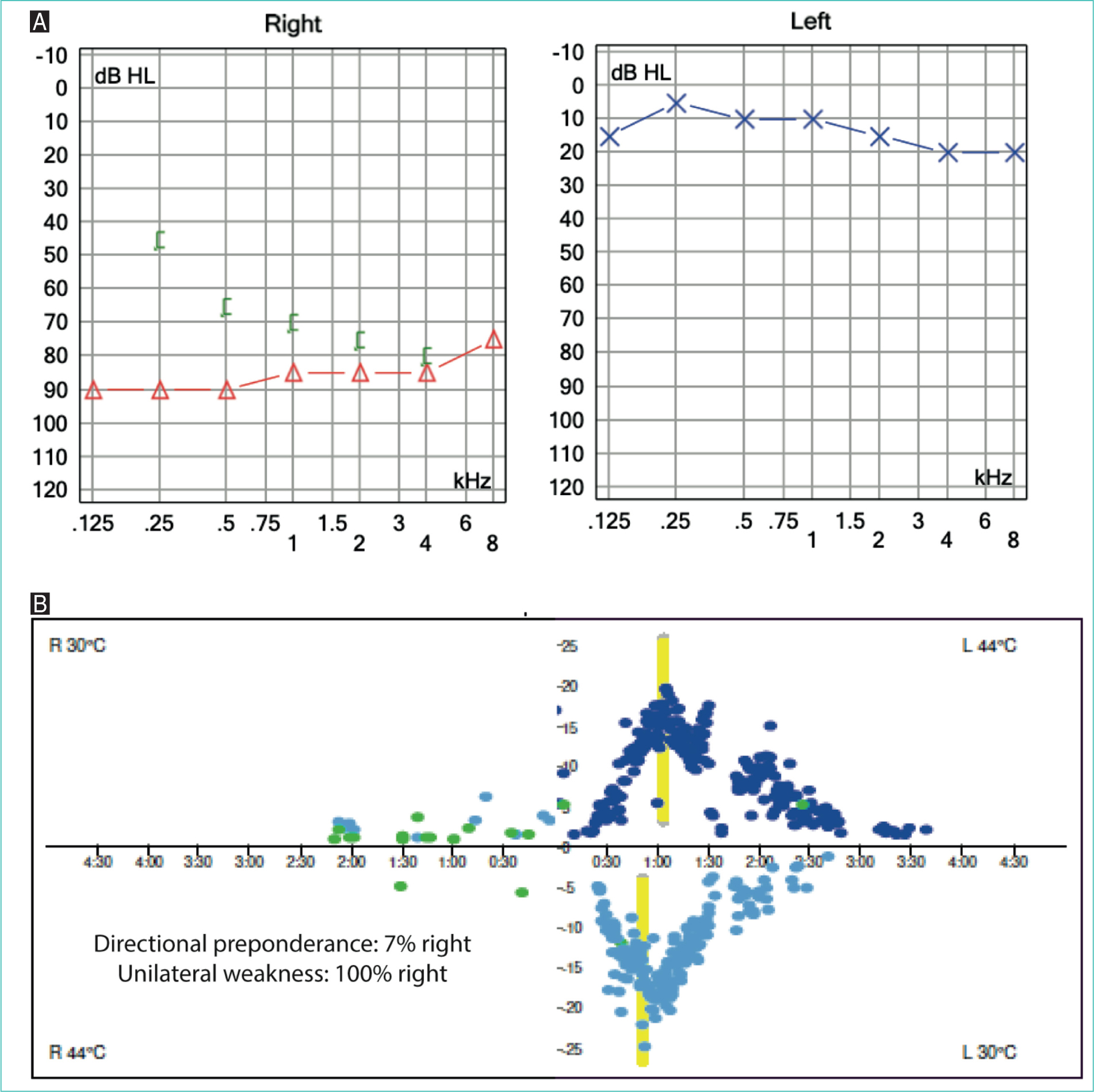
Figure 1. A: audiometry demonstrating right sensorineural hearing loss. B: caloric tests.
Audiologic evaluation evidenced right profound sensorineural hearing loss and normal left hearing. Tympanometry showed average compliance and impedance in both ears. There was no reproducibility of the transient evoked otoacoustic emissions (TEOAEs) and distortion product otoacoustic emissions (DPOAEs) in the affected ear. We performed an auditory pathway assessment using Brainstem Auditory Evoked Potentials. The right auditory threshold was 100 dB, and the observed curves had irregular, disorganized morphology.
During the otoneurologic assessment, spontaneous left-beating nystagmus was observed. The patient had 100% right paresis with no directional preponderance on the caloric test (Fig. 1). On Cervical Vestibular Myogenic Potentials (cVEMPs), we found prolonged latencies and low amplitudes in the P1-N1 complex on the affected ear. Similarly, on Ocular Vestibular Myogenic Potentials (oVEMPs), the right myogenic potential was absent. On the voice evaluation, laryngoscopy showed bilateral fold paralysis in the paramedian position with incomplete glottic closure (Fig. 2). In the acoustic analysis of the voice, there was an irregular oscillogram, Jitter 0.22%, Shimmer 9.60%, and fundamental frequency 141.94 Hz. The broadband spectrogram had partially defined first and second formants. The narrowband spectrogram showed low harmonic definition. Laryngeal electromyography revealed bilateral denervation, with reduced voluntary activity and recruitment of the recurrent laryngeal branch.
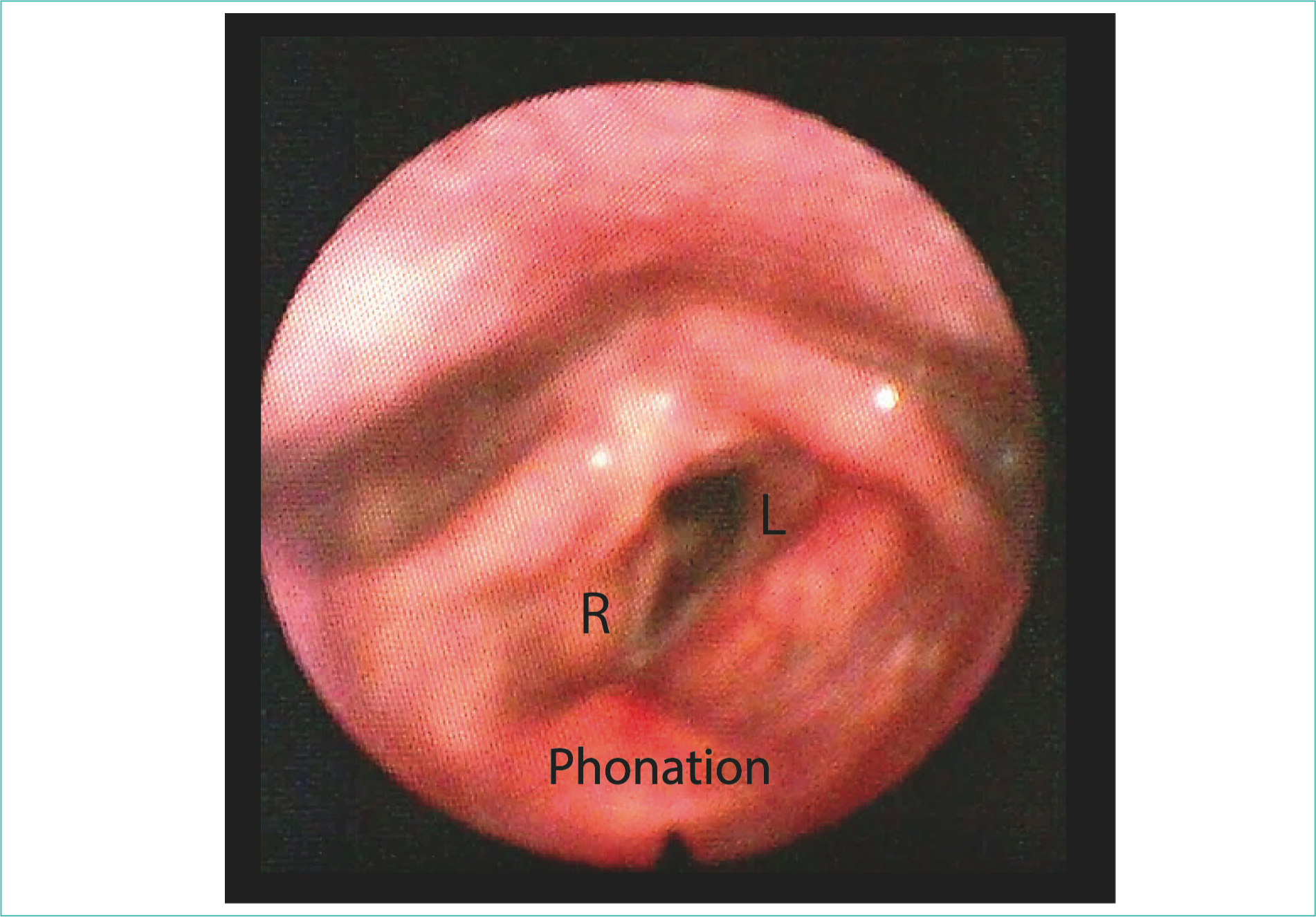
Figure 2. Videonasolaryngoscopy during phonation showing bilateral vocal cord paralysis. L: left; R: right.
In the neuromotor conduction and electromyography, there was reduced amplitude of the orbicularis oris and orbicularis oculi. There was no response on R1 and R2 ipsilateral trigeminal in the corneal reflex. These alterations raised high clinical suspicion of HIV infection. We found positive antibodies, with a viral load of 53,611 copies/mL. Lymphocyte subpopulations showed CD45: 2653 cells/μL, CD3: 2432 cells/μL, CD4: 448 cells/μL, and CD8: 1971 cells/μL. Magnetic Resonance Imaging showed increased signal intensity in the VII and VIII right nerves, compatible with neuritis and cervical adenitis. Based on these findings, the patient was diagnosed with multiple cranial neuropathies: right V1 (ipsilateral trigeminal), VII (facial paralysis, House-Brackmann V), and VIII (vestibular and cochlear injury) neuropathy with bilateral X neuropathy (bilateral fold palsy) (Fig. 3).
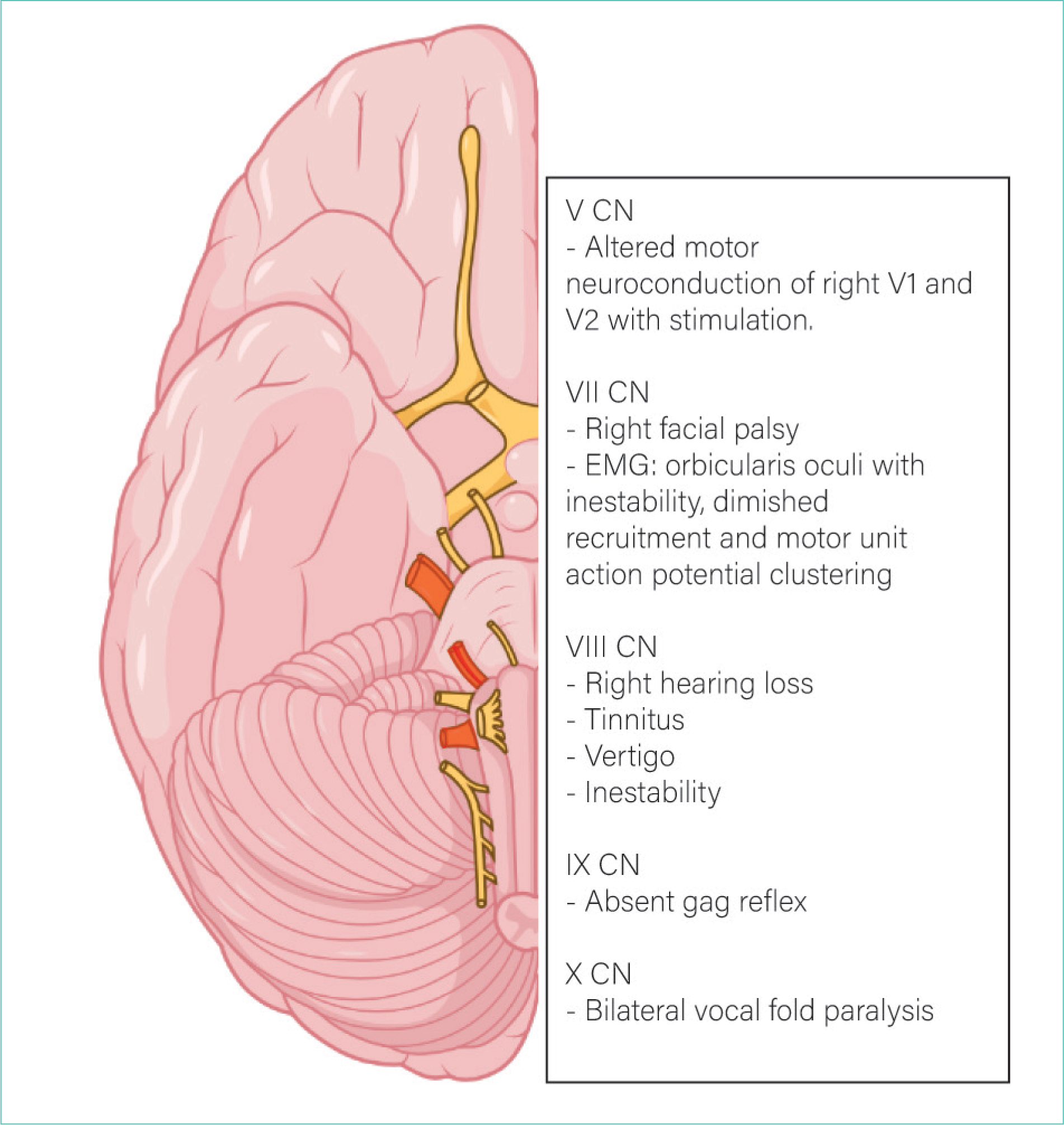
Figure 3. Diagram illustrating the affected cranial nerves.
Discussion
HIV infection is a global health issue. It often affects both the central and peripheral nervous systems, and neurological symptoms may be the first signs of the disease. Among many complications, peripheral neuropathy is the most common and can involve the VII, VIII, IX, V, X, and VI cranial nerves, causing symptoms from facial paralysis to vocal cord problems.6,13
This neuropathy is associated with viruses, such as herpes zoster. Herpes zoster can cause RHS, marked by otalgia, blisters in the outer ear and pharynx, and unilateral hearing loss and vertigo from reactivation in the geniculate ganglion. The reported case shows that while RHS can cause polyneuropathy, HIV may act independently, presenting with no other pathology or infection history.11,14–18
There are limited reports of HIV-related polyneuropathy. Karna et al.19 exposed a case with multiple cranial neuropathies and varied neurological involvement: VI (bilateral), IX, X, and XII cranial nerve palsies, with cerebellar and posterior column involvement. These anomalies were associated with Cytomegalovirus infection. Computed tomography scan showed gyriform enhancement in the right occipital lobe and nodular leptomeningeal enhancement in the left frontal lobe. Recently, Garcia et al.20 published an isolated cranial nerve VI palsy. It was a rare initial manifestation of undiagnosed neurosyphilis VI palsy associated with a 33-year-old male HIV-positive patient with neurosyphilis.
The case presented by Piura et al.21 has more things in common with our case patient, who described an HIV patient with neurosyphilis and Ramsey Hunt syndrome who had VII and VIII unilateral palsy. Calado et al.22 described cranial nerve problems involving the III, VII, and VIII nerves on both sides and the right V nerve. If the IX and X cranial nerves are involved, patients can have trouble swallowing and issues related to the vagus nerve.15
This case report shows how HIV can cause polyneuropathy. It may be accompanied by RHS affecting cranial nerves at different levels (V, VII, VIII, IX, X). This was documented with laboratory and diagnostic tests. The right VIII cranial nerve had an inadequate cochlear microphone, as shown by TEOAEs and DPOAEs, and an auditory threshold of 100 dB in Brainstem Auditory Evoked Potentials. Peripheral nystagmus showed right vestibular affection, corroborated by cVEMPs and oVEMPs in the right ear. Laryngoscopy and laryngeal electromyography showed the bilateral denervation of the X cranial nerve. Clinically, the absence of a bilateral gag reflex proved the affection of the IX cranial nerve. Right VII affection was corroborated with decreased amplitude of the right orbicularis oculi in neuromotor conduction and electromyography. Finally, right V cranial nerve involvement was confirmed by the absence of neuroconduction of R1 and R2 in the flickering reflex.
It’s essential to suspect secondary immunodeficiency in every polyneuropathy or RHS. Remember that RHS is caused by reactivation of a virus. It may help to test all our patients to support early diagnosis and early treatment. In our case, the treatment aimed to improve the patient’s functional condition. Facial physical therapy was required, with possible placement of a weight in the right eyelid, phoniatric and vestibular rehabilitation, and audio prosthetic adaptation in the right ear. The patient was also referred to an integral support clinic for management and follow-up of the HIV.
Conclusion
Etiological investigation is necessary in any case of neuropathy, but it becomes even more important when it affects a young adult. We should be aware that treating the initial sign or symptom is not enough to conclude a diagnosis.
The diagnosis must be timely and objectively supported by tests, and the treatment must be multidisciplinary to help the patient improve their quality of life.
Funding
No funding was received to assist with the preparation of this manuscript.
Conflicts of interest
The authors declare no conflict of interest.
Ethical considerations
Protection of human subjects and animals. The authors declare that no experiments on humans or animals were performed for this research.
Confidentiality, informed consent, and ethical approval. The authors have obtained approval from the Ethics Committee for the analysis of routinely collected and anonymized clinical data; therefore, individual informed consent was not required. Relevant ethical recommendations have been followed.
Declaration on the use of artificial intelligence. The authors declare that Perplexity was used for spelling and syntax review.
